

Email boasts around four billion daily users, which is more than twice the users of Facebook, and the number is expected to grow over the years ahead. The personalisation of emails and the large number of users make it an effective way to increase sales and keep clients engaged. This is why numerous companies use newsletters as a powerful marketing channel and tool.
To succeed, it is essential to develop a solid newsletter content strategy. At 100 Pound Social, we are experts in creating outstanding newsletter strategies and content for B2B clients. Here are six steps you can take to ensure that your newsletter is successful.
What is an Email Newsletter Strategy?
An effective newsletter content strategy will be your plan for creating, sending, and monitoring emails that create lasting relationships with your readers. In contrast to traditional email marketing campaigns, which focus on immediate conversions, an email newsletter strategy concentrates on providing a consistent experience that keeps your subscribers active over time and thereby promotes loyalty.
If you’re running or planning to launch a B2B-focused newsletter, it’s worth investing the time to develop your newsletter content strategy.
It will indeed change and evolve as you determine the best way to reach your target audience, but a solid base built on industry benchmarks and statistics will ensure your newsletter’s success.
Subscribe to the 100 Pound Social Newsletter→
Are Newsletters Still Effective for B2B Marketing?
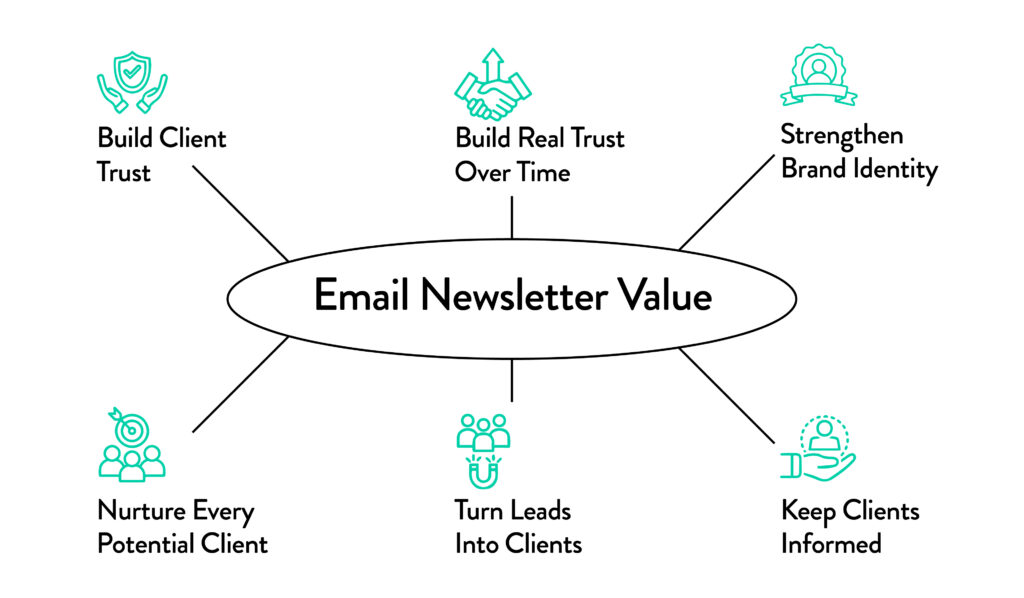
You might wonder whether producing regular newsletters is really worth the time and effort. The short answer is yes, email remains one of the most effective and reliable marketing channels available. Why? Because people still spend a significant portion of their workday in their inbox.
Research shows that professionals check their email multiple times per hour, often adding up to more than two hours per day. That’s a lot of potential touch points with your audience. When used well, newsletters can put your business in front of clients and prospects consistently and credibly, but only if you create content worth their attention.
So how do you make the most of this email opportunity? By sending regular, relevant, trustworthy content that people actually want to open.
Of course, many businesses are trying to do the same, which means you need to stand out. To help you build newsletters that get noticed, here are six practical suggestions.
6 Steps to Create the Best Newsletter Content Strategy
Identify Your Goals
Imagine your email newsletter as a boat on open water, without a clear destination, it’s easy to drift off course. That’s why the first step in building an effective email marketing strategy is to define your goals.
Start by revisiting your business’s wider objectives, values, and long-term vision. Then ask yourself: Why do you want to send a newsletter?
- Do you want to position yourself as an expert in your field?
- Are you looking to create new revenue streams?
- Do you want to attract and engage potential B2B clients to grow your business?
- Are you aiming to build enough recurring income to eventually step away from a traditional 9–5?
Whatever your motivation, clarity is key. Set a specific purpose for your newsletter and attach measurable goals to it. For instance, aim to generate high-quality leads by consistently sharing helpful industry insights, case studies, and practical tips, with the goal of converting at least 20 new B2B clients over the next 12 months.
To make success more achievable, give each goal a clear deadline. A defined timeline keeps you focused, motivated, and better able to track your progress and adjust your approach as your business evolves.
Know Your Audience
Newsletters are a great marketing tool when you provide relevant information to your clients, as well as a huge irritation if you do not. Your email marketing is only successful if you know who your intended audience is and the ways you can assist, inspire, motivate, entertain, and guide them.
If you are not sure of your ideal audience or client segment, here are some methods to narrow your search:
Create Personas For The Audience
Consider who will benefit from your service. Use that knowledge to develop individual personas of your target audience that represent their traits and behaviours. The most important questions you need to be able to answer for the personas you choose include:
- What are their characteristics?
- What industries do they work in?
- What is their job title?
- Which issue does your service solve for them?
- What are their major problems?
- What information might they find useful?
After you have identified your target audience personas, determine where each of them falls within the lead generation funnel.
A buyer persona may seek high-level information about your industry, meaning they will spend a significant amount of time engaging with your blog tutorials and how-to videos. Another persona might already be familiar with your service, so they will prefer the latest updates and advice on how to get the most from it.
Create various email lists for the different audiences within your email management programme, and tailor your content for the newsletter to suit each segment. The ultimate purpose of your newsletter is to educate and entertain your audience. Although each segment will find different types of content valuable and relevant, ensure you are delivering the right information to the right people.
Make Use of Your Existing Analytics
If you have an online presence, you should already have a Google Analytics dashboard in place. Analytics can reveal many things about the visitors to your site. They also show what people do during their visits, helping you understand the type of content they find useful.
Be Sure to Check Your Competitors
Which audiences are they targeting? What type of information are they including in their newsletters? Understanding who your competitors are trying to reach will give you great insights into your audience, all for free.
Ask Your Audience
If you already have an email subscription list, use it. Consider sending a brief survey or poll to find out more about what your target audience is most interested in. You can also use your social media followers by creating LinkedIn, Instagram, and X (Twitter) polls or asking for feedback.
In order to create an effective newsletter that stands out, you must identify exactly whom you want to reach and what they want to know.
Expert Newsletter Content Done For You, From £120/mo →
Plan Your Newsletter Content
Determine the types of content you want your newsletter to contain. Will it include updates on your company, informational content to help clients make buying decisions, or reviews of services? You can use the sales funnel to organise your content, so you know what type will benefit your readers the most. Consider the following:
✅ Are you trying to reach a new audience? A blog post could be the best approach.
✅ Are there website visitors who are unsure whether to buy? Client success stories can help encourage them.
✅ Would you like to reward previous clients with more content, value, and appreciation? Sharing exclusive articles and educational material will benefit them.
✅ Do you want more clients to sign up quickly? Let them know about limited-time discounts and promotions that will get their attention.
When planning your creative newsletter content strategy, look at the topics that are trending in your industry. It is also essential to consider your audience’s interests. What type of content do they find helpful? What information do they need to make buying decisions?
Each content piece must be carefully crafted with useful insights that will help you make the most of each engagement.
After you have created your content for the newsletter, break it into smaller sections to send in your email newsletter over the coming months. You can include various elements within your newsletters, so don’t be afraid to be creative. Use conversational language to make your writing easier to read.
Consider including images, interesting facts, or links to share your content. This allows your audience to engage with your newsletter in multiple ways, making each email more impactful for your subscribers and more efficient to produce.
How Do You Create Valuable Newsletter Content?
Time is precious, and if your readers are going to dedicate their time to reading your newsletters, you must offer content that is worth reading. Content that is helpful, relevant, and captivating is essential to building trust and turning subscribers into loyal clients. This is why your content for the newsletter must be simple, valuable, and easy to understand.
Share Expert Tips
To become a recognised authority in your field, share your expert knowledge in your newsletters. Share advice, insights, and industry trends that add instant value.
Consider the following:
What is something you know that your audience probably does not?
Spend at least a few minutes each day brainstorming, and note down your ideas. While you are monitoring your own content, also take the time to explore your competitors’ content.
Find out what topics they are discussing and consider how you can present these topics in a new, exciting way. If you want your content to stand out, share your personal experiences.
Stories from your own experience are a powerful way to connect with your audience, regardless of the type of newsletter. Your personal stories are your golden ticket. They add real value and knowledge to your content, but they also allow your subscribers to get to know you a little better and engage with you on a more personal level.
This is what sets you apart from others. It is your unique message and voice.
Include Images or Infographics
Viewers show interest in a message when it is accompanied by a relevant image. Images also break up long paragraphs and improve the readability of your writing, which means your readers will stay engaged for longer.
Content becomes far more digestible when relevant images and infographics are added. Remember that your readers are busy, so use visuals to simplify complex information and help readers grasp important ideas quickly.
Create Easy-to-Skim Headings
Email newsletters have a lot of information, trends, and important highlights. When someone opens a newsletter, ideally, they want to see your most engaging, scannable content first.
Visuals are helpful, but you will also need clear headings and well-organised content to guide your readers. If your text is long and cluttered, you may lose your readers’ interest. Keep your headings simple and short, and make sure the content is broken into digestible paragraphs.
Personalise Your Newsletter Tone
Personalisation is one of the most effective ways to make your email marketing feel more human and more relevant. When your subscribers feel that your content speaks directly to them, engagement naturally improves. Even small touches can make a big difference to whether someone opens your newsletter or scrolls past it.
That said, personalisation doesn’t need to be complicated. You can start with simple tweaks using information you already have:
- Use your subscriber’s first name in the subject line or greeting.
- Personalise the “To” field so the email appears addressed to a real person, not just an inbox.
- Make sure your sender name feels genuine and recognisable, people are far more likely to open an email from a person than a faceless brand.
These steps help your emails feel more trustworthy and reduce the chance of landing in spam. Remember: recipients make a decision to open (or delete) within a few seconds. Personalisation helps you make those seconds count by showing that your message is meant specifically for them.
Make a Content Outline
Most newsletters are divided into separate sections. This approach will help you immensely as you create an outline for each email you send.
Here is a brief illustration of a personal finance newsletter. Your content blocks could include:
- A quick introduction with a personal story.
- A round-up of interesting stories.
- An editorial section where you provide ideas.
- Success stories from readers.
- One quick strategy.
It is that simple! Each newsletter becomes less daunting because you have set a standard to follow. You can make it even simpler by creating a newsletter with a curation-only feature. In this case, you will have only one block of text, with each paragraph or subheading commenting on a different topic.
Refine Your Format
The format of your newsletter plays a big role in how easily your audience can read and engage with it. There’s no single “best” design, the right one depends on your brand, your industry, and how much time you realistically have to create each issue. Here are a few approaches that can work well:
- Bold and Visual: Bright colours, custom graphics, and strong imagery for brands that rely on visual impact.
- Clean and Minimal: Mostly text with simple formatting, ideal if you want to focus on clarity and substance.
- Practical and Structured: A straightforward layout with clear sections, minimal visuals, and a strong focus on the message.
- Playful and Light: Emojis, casual language, and fun elements that bring personality to your content.
Most email marketing platforms offer templates to help you get started. Choose one that fits your brand and then organise your content so it’s easy to skim.
If design isn’t your strength (or you’re short on time), stick to simple text-based headlines and clean section dividers. Tools like Canva can also help you create quick, polished headers without any design expertise.
Whichever layout you choose, keep it neat, readable, and consistent. A clean, well-structured format helps your audience absorb your message quickly, and makes them more likely to engage with your content each time it lands in their inbox.
Make Adjustments
Once you have started sending your newsletter, your email management software should provide you with statistics. There are various indicators to gauge your success. However, these three indicators give a solid overview:
- Open Rate: According to Mailchimp, you should aim for an average open rate of around 34.23 percent. If you notice a lower-than-average open rate, you may need to adjust the tone of your subject line and preheader. The timing of your newsletter distribution can also affect the open rate. In general, the middle of the day and mid-week are the most effective times to reach your readers’ inboxes.
- Clickthrough Rate (CTR): The CTR is the proportion of people who have clicked your call-to-action. The average rate is 10.5 percent. If you have a very high open rate but a low CTR, you may need to revise your CTA and the content of the email.
- Unsubscribes: This metric shows how many users have opted out of receiving your emails. If this number rises above 0.01 percent of your email list, there may be an issue that requires attention.
Your newsletter content strategy is not complete once you hit send. It is important to monitor each newsletter’s performance and adjust the content to improve outcomes.
To understand which elements of your newsletter are most popular and engage your readers, use A/B testing. Send two distinct versions of your email to two equal groups of your subscriber list. Test elements such as:
- Casual vs. formal tones
- Headline styles
- Emoji usage
- Time of day and day of the week
- Colour palettes and design elements
Keeping up to date with your newsletter analytics will also help you plan future content. If you notice that a particular reader segment engages with your emails less frequently, you may not be delivering the relevant and engaging content they expect.
The more effort you put into tailoring content for your audience, the more likely your newsletter will succeed.
Latest Trends in Newsletter Content
Which formats work best for newsletter content strategy? Below are some current trends in newsletter content
- Expert-led Q&As or interviews
- Listicles
- Mixed media, step-by-step guides, or recipes with visual content
This does not mean you must abandon long-form or deep-dive articles. You know your readers best, and what they appreciate may differ. Assess and adjust accordingly.
B2B Email Newsletter Examples
Here are some examples of newsletters offered by top B2B companies:
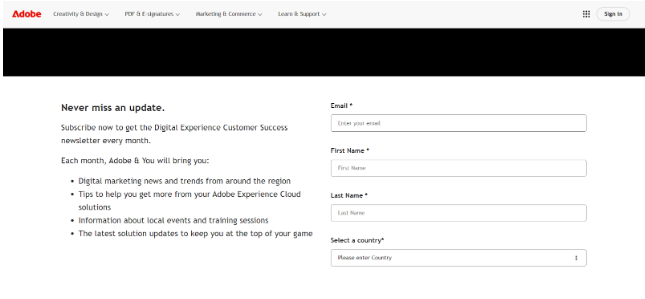
The Adobe newsletter keeps readers informed of the latest trends in design and marketing, as well as news and insights. It offers tips to make the most of Adobe tools and programmes, particularly for current users.
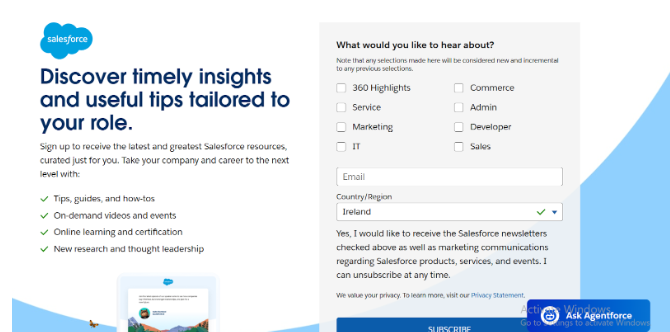
Salesforce provides a role-based B2B newsletter, allowing subscribers to customise the information they receive. Whether you are a CIO, IT professional, or commerce expert, this newsletter delivers relevant and useful content tailored to your role.
Wrapping Up
Your newsletter content strategy will evolve as you learn more about your target audience and what they enjoy in your content. While you may not get it perfect the first time, you will soon develop a sense of what content is most effective.
It is all about interaction. As long as you remain focused on what is important to your readers, you are on the right track.
Next Steps
Creating a high-performing newsletter isn’t about guessing, it’s about having a clear strategy and consistent execution. If you need help, 100 Pound Social’s newsletter writing service can drive real results for your business, from £120/mo.
And if you want to change your social media from a time drain into a client-generating asset?
Since 2017, we’ve helped over 1,000 business owners across diverse industries develop effective social media strategies that drive real client acquisition results.
Our clients consistently report increased turnover, growing social media followings that convert to business enquiries, and most importantly, signing new clients through their improved online presence.
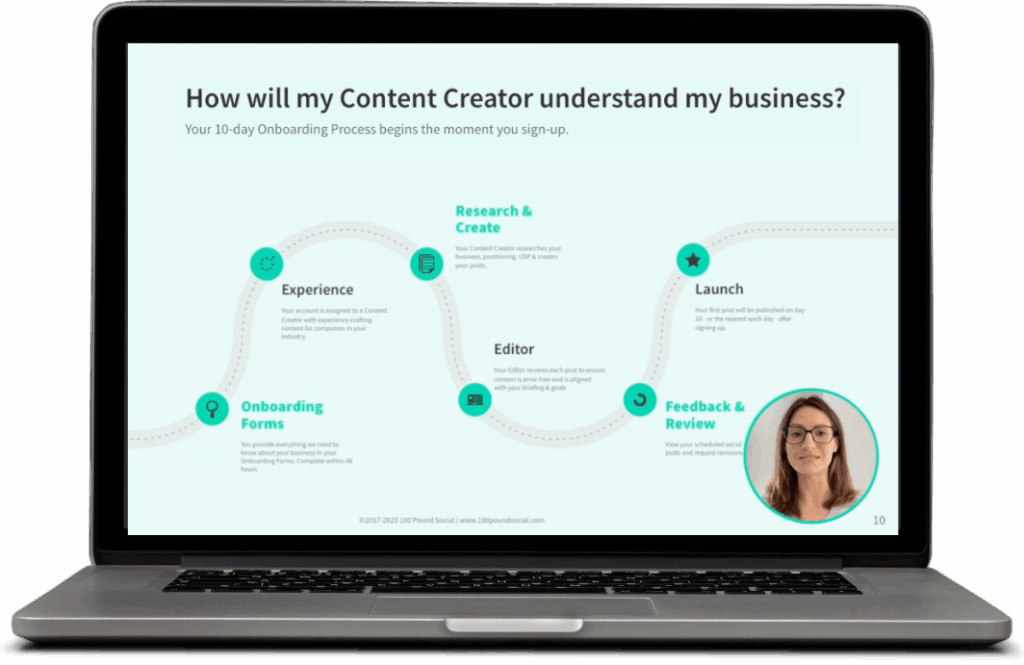
Join a free 15-minute demo to discover how we can create expert content for your business from just £100 per month. Our comprehensive approach is focused on client attraction, content creation that resonates with potential clients, and performance optimisation—everything you need to turn your audit findings into sustainable business growth.
Book your demo today and let us show you how professionally managed content can help you attract more clients, stay consistent, and free up your time to focus on running and growing your business.